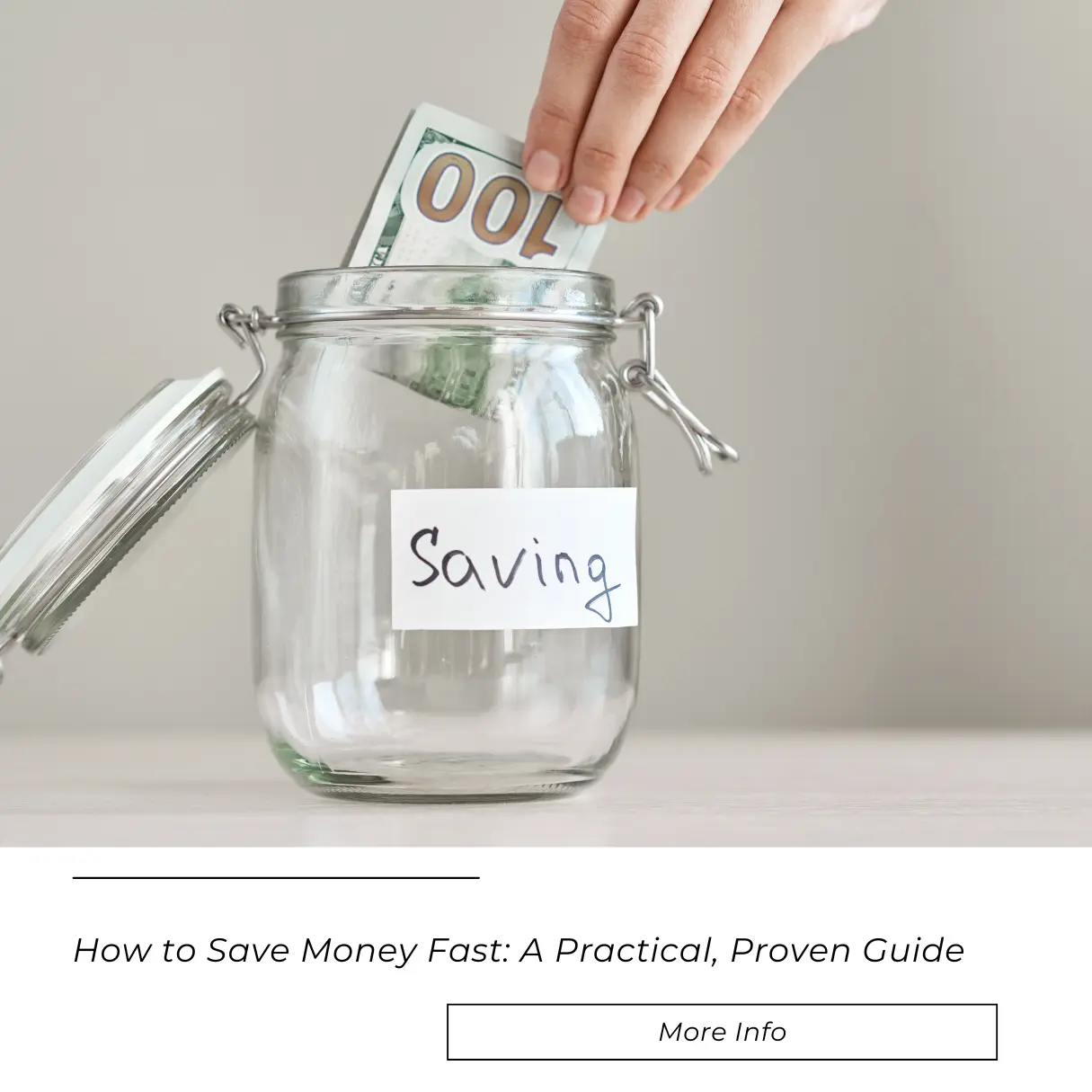
Investing doesn’t require a large bank account. It is possible to start building wealth even with limited funds. Over time, disciplined and informed investing—even with small amounts—can lead to significant financial progress thanks to compound growth, cost‑efficient strategies, and long‑term planning. T
his guide explains practical ways to invest with little money in the United States and how to set up your financial foundation before you begin.

- Why Start Investing With Little Money?
- Step 1: Prepare Your Financial Basics
- Step 2: Choose the Right Accounts
- Step 3: Investment Options for Small Budgets
- Step 4: Essential Investing Strategies
- Step 5: Tools and Platforms to Get Started
- Risks and Considerations
- Sample Investing Path With Little Money
- FAQ: How to Invest With Little Money in the USA
Why Start Investing With Little Money?
Many people believe you need a large lump sum to invest, but that is no longer true. Modern financial products, low‑cost brokerage platforms, and fractional ownership make it possible to get started with very modest amounts. Research confirms that investing early and consistently, even in small increments, can build meaningful wealth over time.
Investing with little money matters because:
- You benefit from compounding, where investment gains generate further gains over time.
- You build financial discipline by contributing regularly and avoiding attempts to “time the market.”
- You gain learning experience without risking large sums.
- You can diversify your money across multiple assets, reducing risk.
Before diving into specific strategies, it’s important to form a solid financial foundation.
Step 1: Prepare Your Financial Basics
Create an Emergency Fund
Before investing, you should have an emergency fund equivalent to three to six months of essential expenses in a safe and easily accessible account (e.g., a high‑yield savings account). This prevents you from needing to sell investments prematurely in case of unexpected bills.
Reduce High‑Interest Debt
High‑interest consumer debt (e.g., credit card debt) often carries interest rates above what many investments can realistically earn. Paying down such debt can offer a risk‑free return comparable to your interest cost.
Know Your Goals and Timeline
Define why you’re investing (retirement, down payment, education, etc.). A clear goal shapes your choice of investment vehicles and risk profile. For example:
- Short‑term goals (0–3 years): prioritize liquidity and safety.
- Mid‑term goals (3–10 years): balanced growth and stability.
- Long‑term goals (10+ years): higher growth potential with more equities.
Step 2: Choose the Right Accounts
In the U.S., investment accounts fall into two main categories:
Tax‑Advantaged Retirement Accounts
401(k) Plans
If your employer offers a 401(k) plan, especially with matching contributions, prioritize it. Employer matching is essentially free money and instant return on your contribution.
Individual Retirement Accounts (IRAs)
IRAs—both Traditional and Roth IRAs—offer tax advantages that help your investments grow more efficiently.
- Roth IRAs: contributions are made after tax, but withdrawals in retirement are tax‑free.
- Traditional IRAs: contributions may be tax‑deductible, lowering taxable income today.
Some IRA providers have $0 minimums, so you can begin with very little money.
Taxable Brokerage Accounts
Taxable brokerage accounts do not offer tax breaks like IRAs, but they have no contribution limits or withdrawal restrictions, making them flexible for goals other than retirement. Many popular brokerages allow you to start with no minimum investment.
Step 3: Investment Options for Small Budgets
Low‑Cost Index Funds
Index funds track a market index (e.g., the S&P 500) and provide broad market exposure at low cost. These funds are often recommended for beginners due to their diversification and minimal fees. Many index funds have no minimum investment or can be purchased via fractional shares.
Warren Buffett, one of the world’s most successful investors, has long advised that most individual investors are well‑served by investing in a low‑cost S&P 500 index fund.
Advantages
- Diversification reduces risk.
- Low expense ratios keep more of your returns working for you.
- Historically, broad stock market indices have delivered positive long‑term returns.
Exchange‑Traded Funds (ETFs)
ETFs are similar to index funds but trade like stocks throughout the trading day. They offer low fees and diversification, exposing your investment to dozens or hundreds of companies in one holding. Many brokers now offer zero‑commission ETF trading, letting small investors trade without paying fees that eat into their returns.
ETFs suitable for small investors include broad market funds as well as specialized sector or international ETFs. For example, a total U.S. market ETF can offer exposure to large, mid, and small‑cap stocks in one product.
Fractional Shares
Fractional shares allow you to buy a portion of a share rather than the full share. This is especially useful for expensive stocks. Instead of needing thousands of dollars to buy one share, you can start with a few dollars. Many brokers support fractional share investing in both stocks and ETFs.
Micro‑Investing Apps
Micro‑investing apps automate small contributions by rounding up everyday purchases to the nearest dollar and investing the difference. Over time, these small amounts can accumulate into a meaningful portfolio.
Dividend Reinvestment Plans (DRIPs)
If you invest in dividend‑paying stocks or funds, a DRIP automatically reinvests dividends into additional shares, compounding your returns over time. This allows your investment to grow even without adding new cash.
Step 4: Essential Investing Strategies
Dollar‑Cost Averaging (DCA)
Dollar‑cost averaging means investing a set amount of money at regular intervals, regardless of market conditions. This reduces the risk of mistiming a lump sum investment and lowers the average purchase cost over time. It encourages discipline and long‑term thinking.
For example, if you invest $50 each month into an ETF, you might buy more shares when prices are low and fewer when prices are high.
Diversification
Diversification means spreading your investments across different types of assets and sectors. It prevents your entire portfolio from suffering large losses if one investment performs poorly. Diversification is especially important when investing small amounts, as it can protect against volatility and reduce risk.
Automation
Setting up automatic contributions to your investment accounts ensures consistent investing without manual intervention. This habit can dramatically increase your investment over time and removes the emotional impulse to delay investing.
Step 5: Tools and Platforms to Get Started
The following tools and platforms are geared toward investors with limited funds (source: general investing knowledge from sources above across financial articles):
Robo‑Advisors – Automated, diversified portfolios based on your goals and risk tolerance.
Micro‑Investing Apps – Round up purchases and invest spare change.
Low‑Cost Brokers – No minimum balances, zero‑commission trading, and fractional shares.
Popular brokerages that support investing with little money include (not exhaustive):
- Charles Schwab
- Fidelity
- Robinhood
- Vanguard
Many of these allow fractional shares and have low or no minimums.
Risks and Considerations
Investing always involves risk. Here are important factors to keep in mind:
Market Risk
Investments can lose value, especially in the short term, and no return is guaranteed.
Fees and Costs
Even small fees can erode returns when starting with a low budget. Always choose low‑cost funds and brokers.
Taxes
Understand tax obligations in taxable accounts versus tax‑advantaged accounts like IRAs.
Fraud and Scams
Be wary of investments promising unusually high returns with little risk—these are often scams. Reliable investment platforms are regulated by authorities like the SEC.
Sample Investing Path With Little Money
A beginner investor with $50–$100 per month might follow this roadmap:
- Emergency Fund: Save 3–6 months of expenses in a high‑yield savings account.
- 401(k) Match: Contribute enough to your employer’s 401(k) to get a full match if available.
- Roth IRA: Open a Roth IRA with a low‑cost provider and set up automatic $50 monthly contributions into index funds and ETFs.
- Fractional Shares: Use part of any additional funds to buy fractional shares in diversified ETFs or dividend‑paying stocks.
- Reinvest Dividends: Enroll in automatic dividend reinvestment to compound your returns.
Over decades, this consistent, long‑term strategy can yield substantial growth.
Learning how to invest with little money is less about the starting amount and more about consistency, discipline, and smart use of available tools. You can begin with modest monthly contributions, take advantage of tax‑advantaged accounts, and build a diversified investment portfolio with index funds, ETFs, fractional shares, and automated strategies.
The most important step is to start early, stay consistent, and invest within your means—no matter how small. The habits and strategies you build today can compound over time and contribute significantly to your long‑term financial goals.
Reliable Online Sources for Investing With Little Money
- How to Invest with Little Money (Britannica Money) – practical beginner strategies including index funds, ETFs, fractional shares, micro‑investing, and dividend reinvestment plans. How to Invest with Little Money (Britannica Money)
- Micro‑Investing Explained (Britannica Money) – overview of micro‑investing, recurring small contributions, and low‑minimum investing. Micro‑Investing | Types, Apps, & How to Start (Britannica)
- Micro‑Investing Guide (Fidelity) – how to start investing small amounts, fractional shares, automation, and simple investment options. Micro‑Investing: How to Get Started on Any Budget (Fidelity)
- Beginner Investing Basics (NerdWallet) – step‑by‑step guide on starting investing, accounts, strategies, and options. How to Start Investing: A Guide for Beginners (NerdWallet)
- Beginner Investing With Small Funds (MoneyWise) – discussion of active vs. passive investing and intro options for small amounts. How to Invest With Little Money (MoneyWise)
- SmartAsset on Small Money Investing – explains fractional shares, ETFs, and vehicles suitable for investors with limited funds. How to Invest With Little Money (SmartAsset)
FAQ: How to Invest With Little Money in the USA
1. Can I really start investing with just $50 or $100?
Yes. Thanks to fractional shares, ETFs, and micro‑investing apps, you can begin investing with very small amounts. Consistent contributions, even small ones, benefit from compound growth over time. (Britannica Money)
2. What are the best accounts for small investors?
- Roth IRA / Traditional IRA: Tax advantages and low minimums.
- 401(k): Employer match is free money.
- Taxable brokerage accounts: Flexible, no contribution limits, and many support fractional shares. (NerdWallet)
3. What types of investments should I start with?
- Index Funds / ETFs: Low-cost, diversified, historically good long-term returns.
- Fractional shares: Buy portions of expensive stocks or ETFs.
- Dividend Reinvestment Plans (DRIPs): Automatically reinvest dividends for compound growth. (SmartAsset)
4. Are there risks investing small amounts?
Yes. Even small investments can lose value if the market drops. Always consider:
- Market risk: Prices can fluctuate short-term.
- Fees: High fees can significantly reduce small investments.
- Scams: Avoid any platform promising unusually high, “guaranteed” returns. (Benzinga)
5. What is dollar-cost averaging (DCA), and why is it useful?
Dollar-cost averaging is investing a fixed amount regularly regardless of market conditions. It reduces the risk of investing all at once when prices are high and helps you stay consistent with small contributions. (Kiplinger)
6. Should I pay off debt before investing?
It depends on the interest rate. High-interest debt (like credit cards) usually outweighs the returns from small investments. Consider paying down high-interest debt first, then start investing. (Verinn)
7. Can I invest for retirement with little money?
Absolutely. Using a Roth IRA or 401(k), you can start with small contributions. Even $50–$100 per month, invested consistently, can grow significantly over decades. Automation is key. (Fidelity)
8. Are there apps that make investing easier for beginners?
Yes. Popular apps include:
- Acorns – rounds up everyday purchases and invests the spare change.
- Stash – allows fractional share investing and educational guidance.
- Robinhood – commission-free trades and fractional shares.
- Betterment / Wealthfront – robo-advisors that automate investments. (Britannica Money)
9. How long until I see growth from small investments?
Investing is a long-term strategy. Even small amounts grow slowly at first. Typically, measurable growth happens after 3–5 years, but maximum benefits are seen over 10–20 years thanks to compounding. (SmartAsset)
10. Can I invest safely with little money?
Yes, by:
- Choosing low-cost, diversified ETFs or index funds.
- Using dollar-cost averaging to reduce timing risk.
- Avoiding high-fee products or speculative investments.
- Keeping some funds in a high-yield savings account for emergencies. (Britannica Money